

Parent-teacher conferences in middle school are… a lot. You know the drill: you’re rushing from class to meetings, you’re trying to remember which student struggles with organization and which one is suddenly thriving in your class and you’re hoping the stack of papers on your desk somehow sorts itself while you’re talking with families. By the end of the night, you’ve had so many conversations that your brain feels like a browser with 37 tabs open.
This is exactly why I created my Editable Parent-Teacher Conference Forms with Student Self-Reflection. After years of trying different systems, half-systems, sticky notes, and “I’ll remember this later” moments (spoiler: I didn’t), I wanted something simple, organized, and truly student-centered. And I wanted it to work specifically for middle school — because we all know this age group comes with its own unique mix of growth spurts, big feelings, and academic leaps.
If you’re looking for a smoother way to run conferences this year, I think this little collection of forms might become your new favorite tool.
Why Middle School Conferences Need a Different Approach
Elementary conferences tend to be more guided by the teacher. High school conferences sometimes revolve around grades and credit recovery. Middle school? It’s the awkward in-between.
Students are old enough to reflect on their own learning, but not always practiced at it. Parents are still very involved, but they’re also starting to step back. Teachers are juggling anywhere from 75–150 students, each with their own story.
Because of that, middle school conferences work best when:
- conversations are structured, so you don’t rush or forget important points
- students have a voice, even if they’re not physically at the conference
- parents walk away with a clear understanding of what’s going well and what needs work
- you (the teacher!) feel prepared instead of overwhelmed
That’s the heart behind this resource — giving you a way to stay organized while making conferences more meaningful for everyone involved.
What’s Inside the Conference Pack
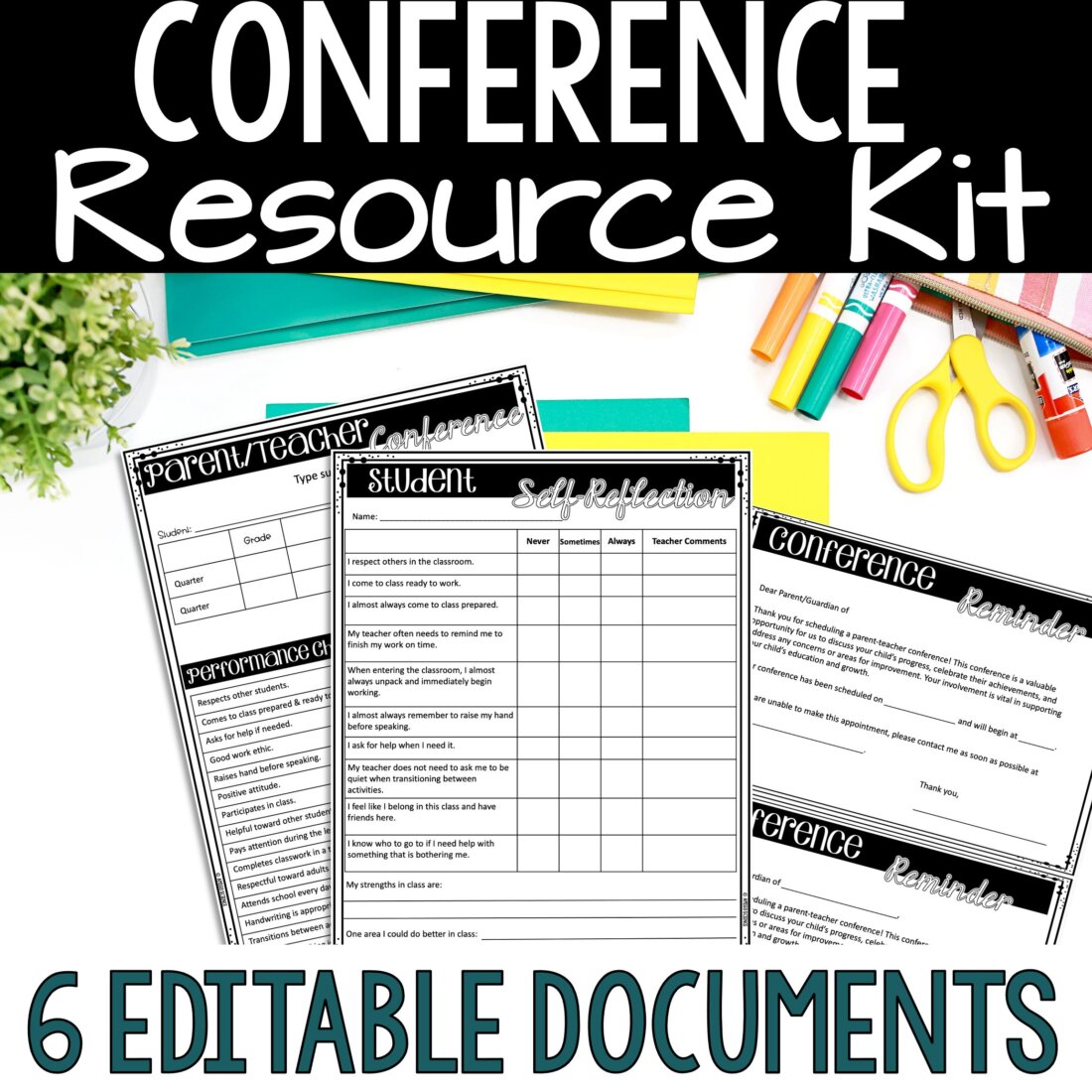
This resource isn’t just a form or two. It’s a full, classroom-ready conference workflow you can use year after year. Here’s what you get and how each piece fits into the bigger picture:
1. Student Self-Reflection Form
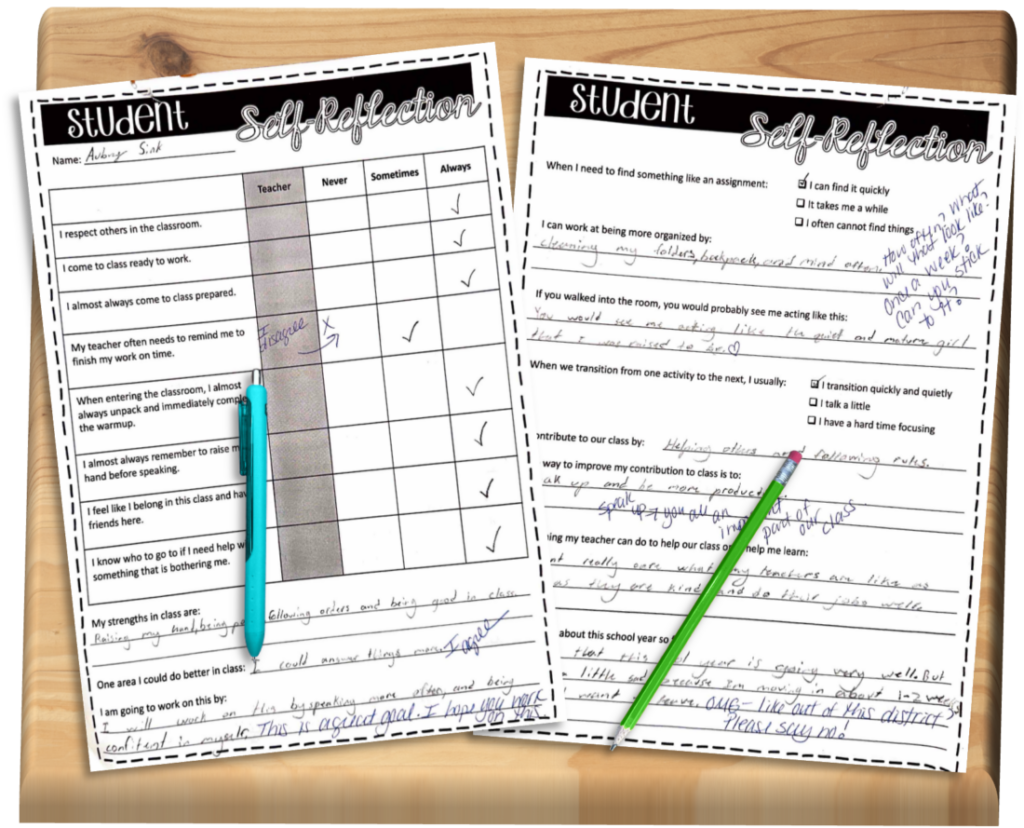
This is my absolute favorite part. Students reflect on their strengths, challenges, learning habits, and goals before the conference happens. Middle schoolers are surprisingly honest when you give them the chance to reflect — and their responses often become the best starting point for your parent conversations.
Plus, when students reflect on their own progress, they start to take more ownership. It’s a small thing that makes a big difference.
2. Teacher Conference Form
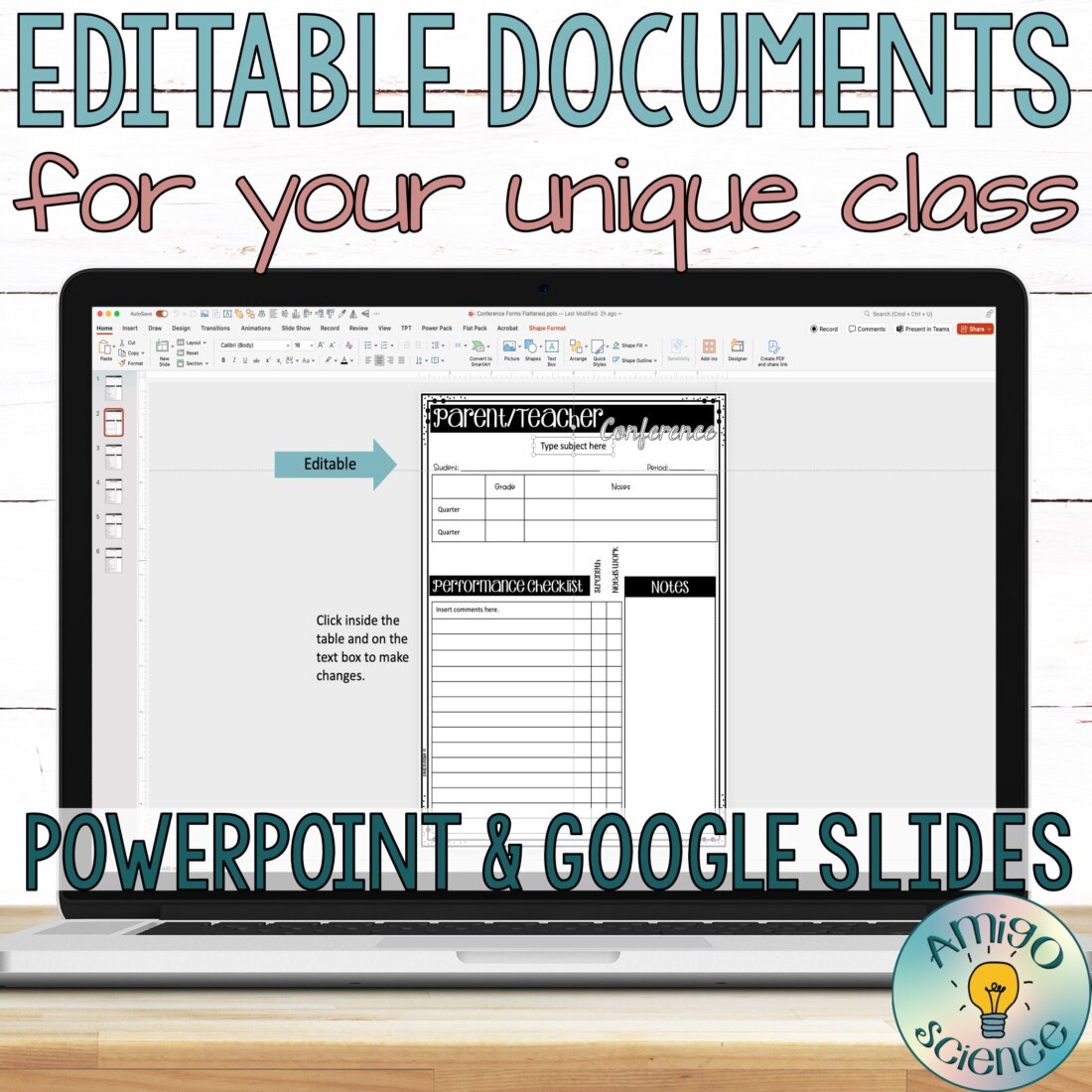
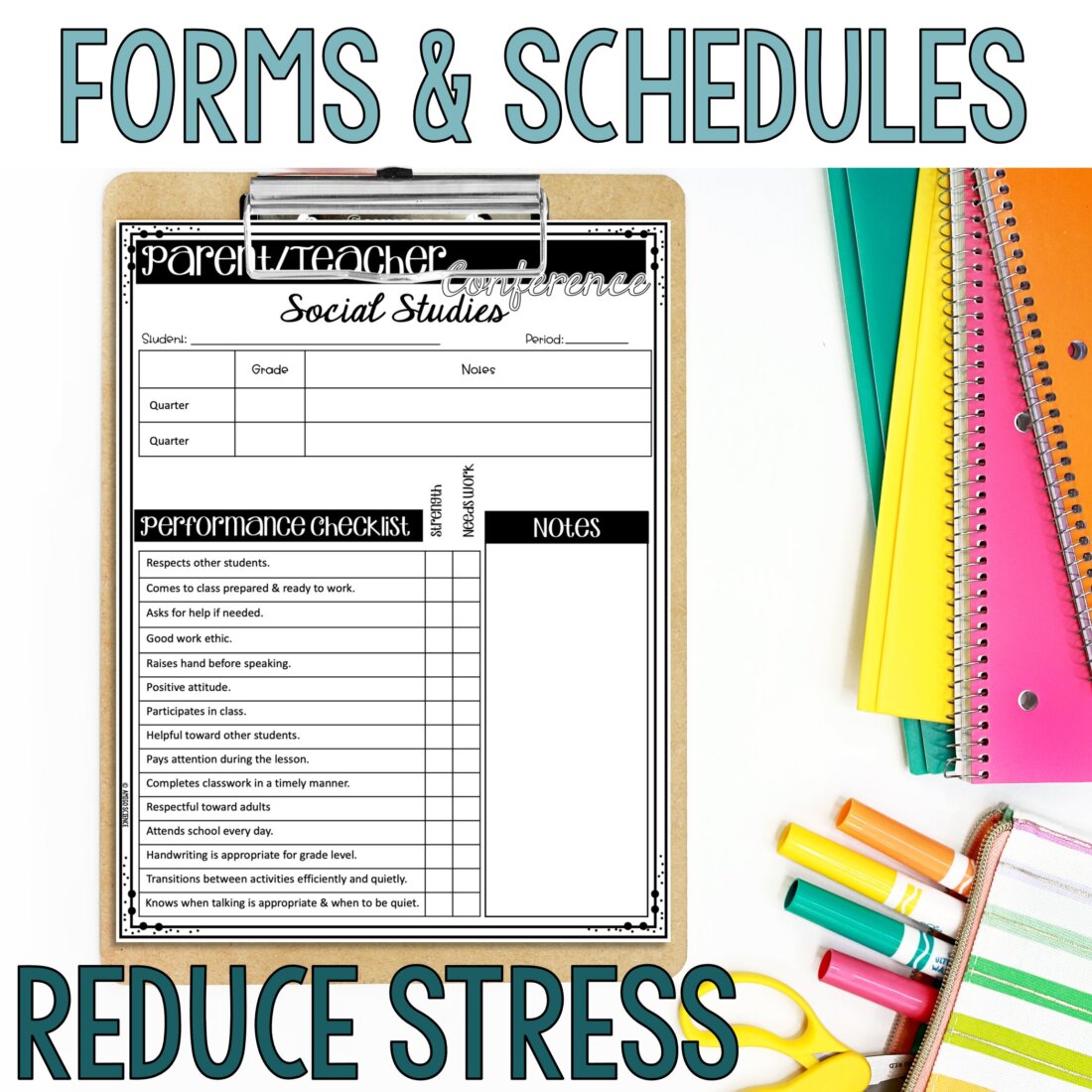
This is where you organize your main talking points. You can type directly into it, print it, and take it with you from meeting to meeting. It includes space for strengths, challenges, strategies, and any follow-ups you need to track.
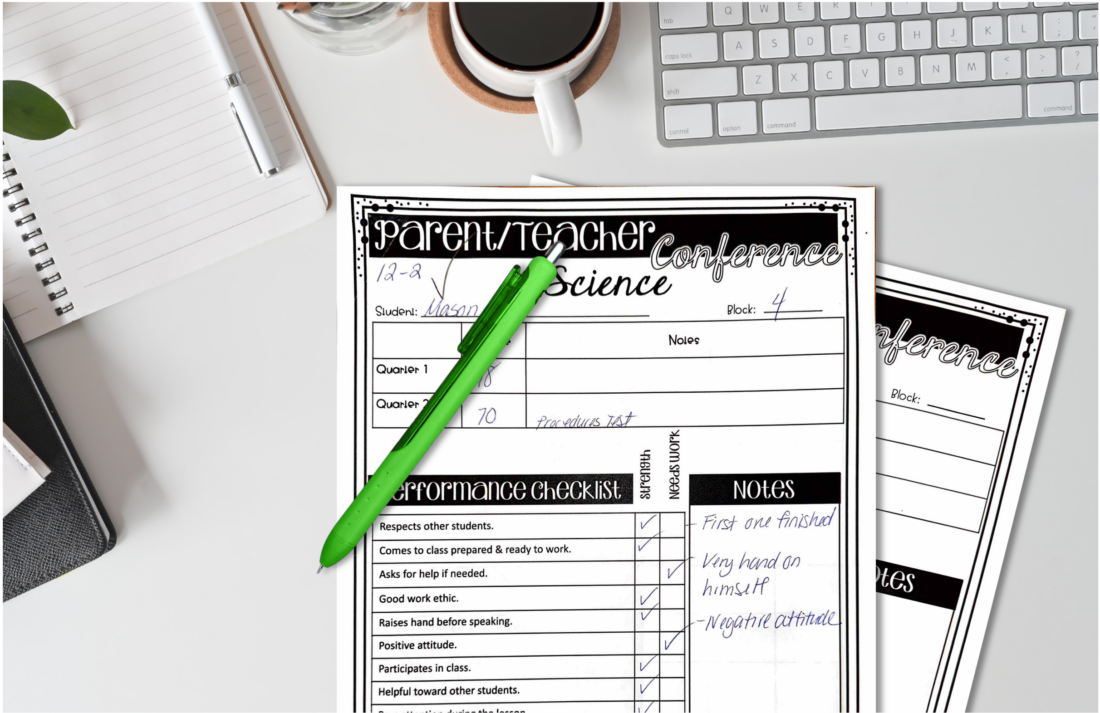
No more flipping through notebooks or trying to decode rushed scribbles.
3. Parent Reminder Letters
You can send these home or email them out. Conferences run so much smoother when parents know exactly when and where they’re supposed to be.
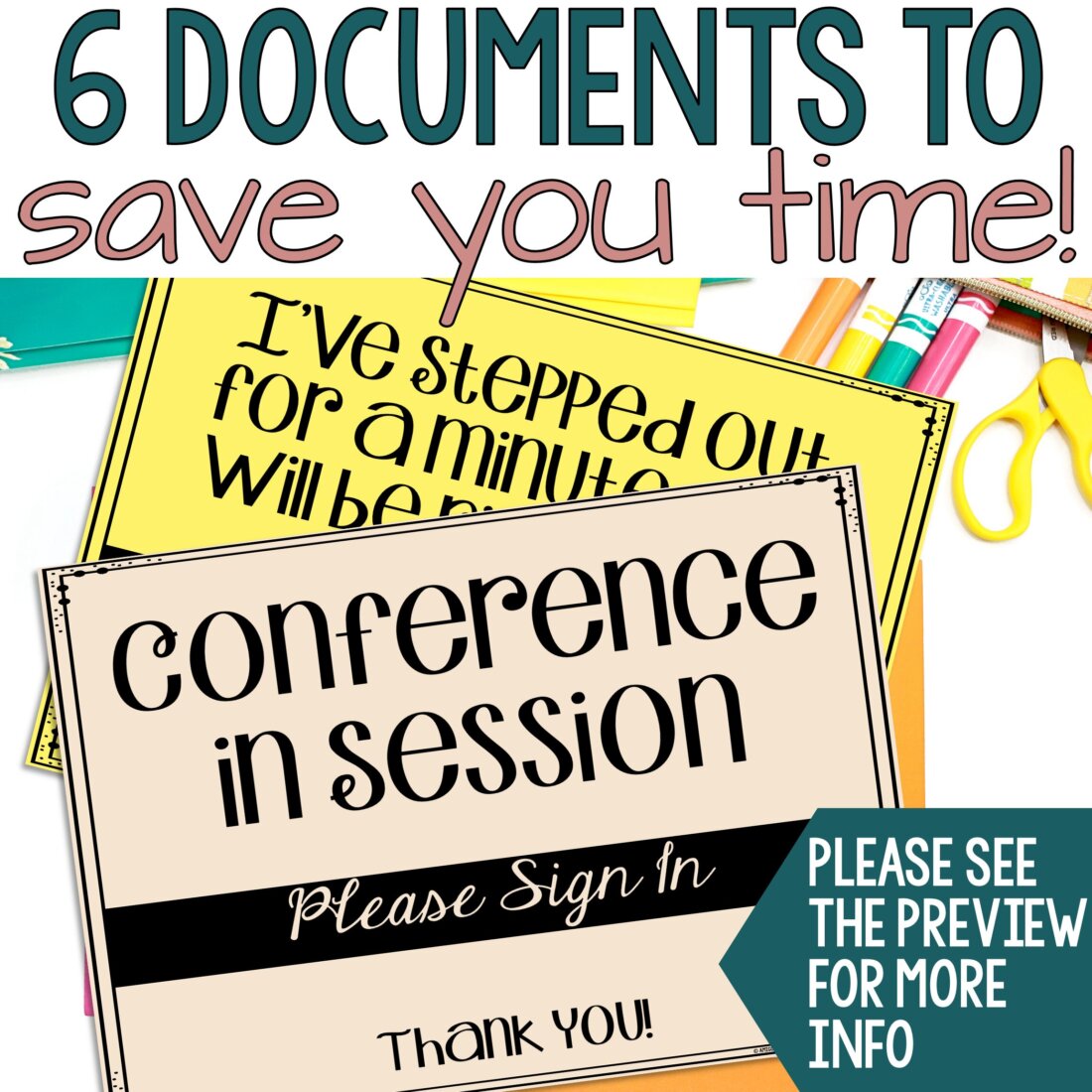
4. Sign-In Sheet
It seems simple, but keeping track of who attended (and who didn’t) helps you stay organized if you need to schedule makeup meetings or follow up with families.
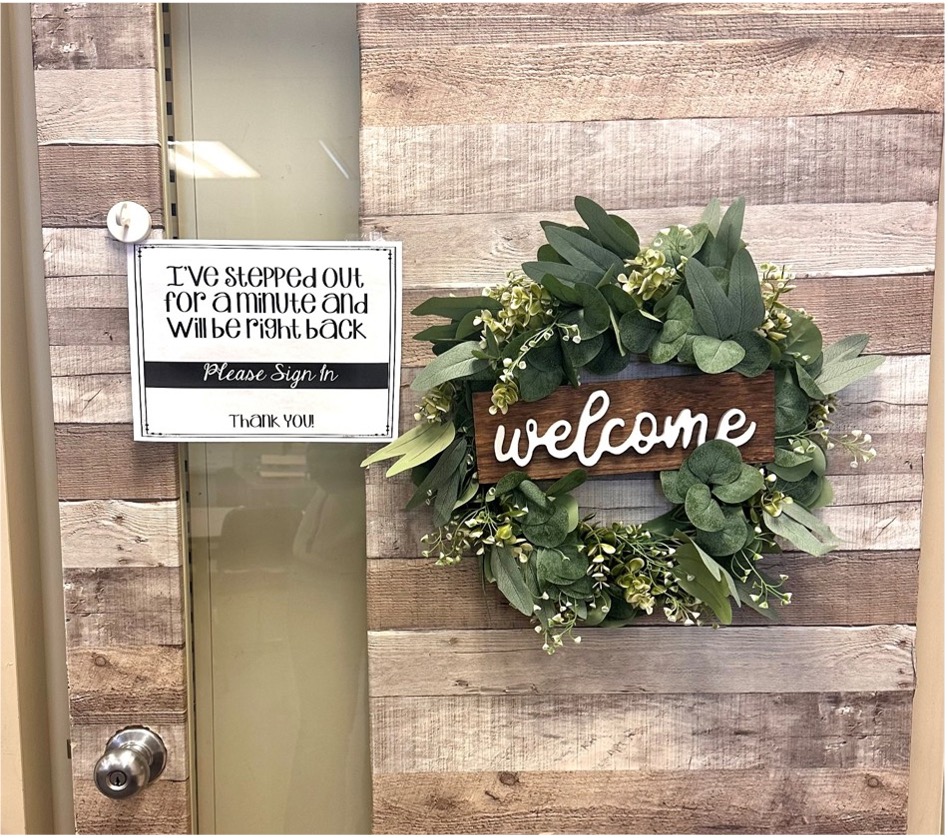
5. Door Sign
Because the last thing you need is someone accidentally walking in while you’re halfway through a sensitive conversation.
6. Conference Schedule
A practical but essential tool. Print it, fill in your slots, and keep your evening running on time. Middle school conferences always run tight — this helps you stay on track.
The Middle School Twist: Making Students Part of the Conversation
Whether or not your students sit in on the conference, the self-reflection form gives them a voice. And honestly, it changes everything.
When I started using student reflections:
- parents became more engaged
- students were more accountable
- conferences felt less like “report-outs” and more like genuine connections
A parent hearing their child say, “I want to get better at keeping track of my assignments,” hits differently than hearing it from a teacher. When students take part — even indirectly — conferences feel more collaborative and less top-down.
If your school does student-involved conferences, this resource fits beautifully. If your school doesn’t, the reflection form still gives you great insight and a way to bring student voice to the table.
What a Conference Sounds Like When You’re Truly Prepared

Imagine walking into conference night with:
- your schedule printed
- organized notes for each student
- student reflections already completed
- reminders sent to parents
- clear talking points ready to go
- and everything in one tidy folder
Instead of spending half your brainpower searching for data, shuffling papers, or trying to remember that thing the student mentioned two weeks ago, you get to focus on the actual conversation.
You’re calmer. Parents feel supported. Students benefit from thoughtful next steps instead of rushed ones.
And because the forms are editable, you can tweak them to fit your style, your team’s norms, or your school’s expectations.
Tips for Getting the Most Out of This Resource

Here are a few things I’ve learned along the way that make conferences run even smoother:
1. Have students complete their self-reflection during homeroom or class.
If you send it home, it may never come back. Middle schoolers mean well, but backpacks have a way of eating papers.
2. Meet with students individually — yes, it really is possible
I know what you’re thinking: “There’s no way I can meet with all my students one-on-one.” But you absolutely can — even with a full middle school roster. I teach 75 students, and I meet with every single one of them before conferences. The trick is getting a little creative.
Here’s what works for me: I pull students one at a time to a table in the back of the room. We sit facing away from the class so we can talk privately without making it a big production. Meanwhile, the rest of the class works on a partner or small-group activity — something engaging enough that they’re occupied and not listening in.
Because the conversations are focused and the kids come prepared with their self-reflection forms, I can usually meet with an entire class in a period or two. These short check-ins make a huge difference. Students feel heard, I get clarity before meeting with parents, and everyone walks into conferences on the same page.
3. Use highlighters during the meetings.
Highlight next steps or action items as you discuss them. It helps families remember what came out of the meeting.
4. Schedule a buffer slot every few conferences.
Someone will always run late or have extra questions. A little breathing room prevents the whole night from falling behind – and give you time for a bathroom break! This is a really important step!
5. Keep a blank copy of your Teacher Conference Form on your clipboard.
When a parent catches you in the hallway for an impromptu conference (and you know this will happen), you’ll still be able to document the conversation.
Final Thoughts
Middle school conferences shouldn’t feel like an endurance test. With the right tools, they can be organized, purposeful, and even energizing. Students get to reflect. Parents feel informed. You stay on track and in control.
If you’re ready for conference nights that feel calmer and more intentional, this resource is ready for you. It’s editable, easy to use, and made with real middle school experience behind it.
You deserve a conference season that actually supports your students — and doesn’t leave you drained.
Thanks for reading! Let me know what you think!


https://shorturl.fm/Kltzk
https://shorturl.fm/W6ZLl
https://shorturl.fm/Tmik0
https://shorturl.fm/e7vLa